INTRODUCTION:
Halitosis – or chronic bad breath – is something that mints, mouthwash or a good brushing can’t solve. Unlike “morning breath” or a strong smell that lingers after a tuna sandwich, halitosis remains for an extended amount of time and may be a sign of something more serious.
CLASSIFICATION :
- BASED ON ETIOLOGY :
- Local factors of pathological origin : poor oral hygiene , extensive caries, periodontal disease , cysts , tumors .
- Local factors of non pathological origin : stagnation of saliva associated with food debris , dentures, excessive smoking .
- Systemic factors of pathological origin : diabetes mellitus, liver failure, lung abscess , tuberculosis .
- Systemic factors of non pathological origin : diet like garlic , onion , meat , excessive alcohol consumption.
- Xerostomia :conditions like sjogren’s syndrome, radiation therapy.
2. BASED ON PATIENT’S CRITERIA :
- Genuine halitosis
- Pseudo halitosis
- Halitophobia
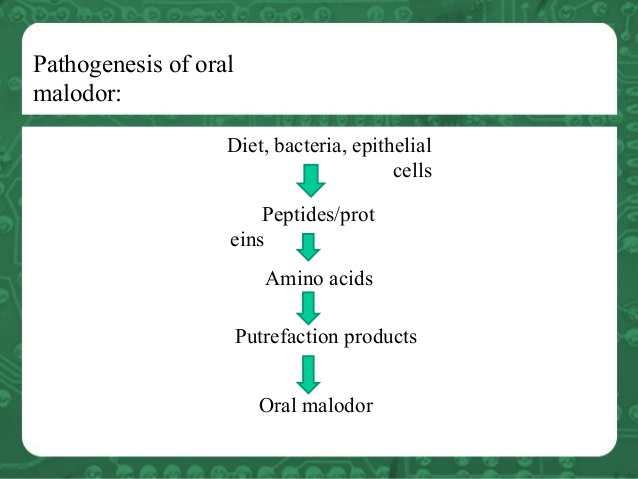
PATHOGENSIS OF MALODOR :
ETIOLOGY :
- Physiological halitosis
- mouth breathing
- medications
- aging and poor dental hygiene
- fasting / starvation
- tobacco
- foods like onion , garlic and alcohol
2. Pathological halitosis:
- periodontal infection
- stomatitis
- xerostomia
- faulty restorations
- unclean dentures
- oral cancers
- candidiasis
- nasal infections
- GERD
- bronchitis, pneumonia
- diabetes mellitus
- renal failure
- fever
DIAGNOSIS :
- Review of medical , dental , personal history
- Clinical examination : tongue coating, mouth breathing , xerostomia
- Complete periodontal examination
- Measurement of malodor : gas chromatography . halimeters, BANA test , chemiluminescence , diamond probe
TREATMENT :
- Brush your teeth after you eat.
- Floss at least once a day.
- Brush your tongue.
- Clean dentures or dental appliances. .
- Avoid dry mouth.
- Adjust your diet. .
- Regularly get a new toothbrush.
- Schedule regular dental checkups.
- Regular use of halita solution which reduces the levels of volatile sulfur compounds .
References: Essentials of clinical periodontology . Shantipirya reddy 5th edition

 Dentowesome