Written by – Dr. Urusa I Inamdar
Hot tooth:
A tooth that is difficult to anesthetize is known as a ‘hot tooth ‘. This is most commonly encountered in a mandibular first molar tooth wherein after the anesthetic block , the patient may describe profound numbness of the ipsilateral lip and tongue but still may experience acute pain during the access opening procedure.
Most common sites of occurrences:
- primary and permanent teeth
- sites of recent or defective restorations
- Sites of recent trauma
- mandibular molars
- patients with anxiety about dental treatment or patient who have been in pain for several days usually require a more sophisticated approach.
Signs and symptoms
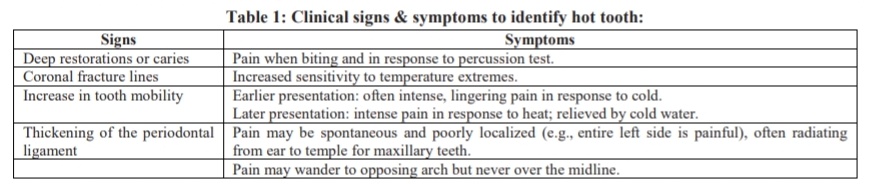
Hypothesis
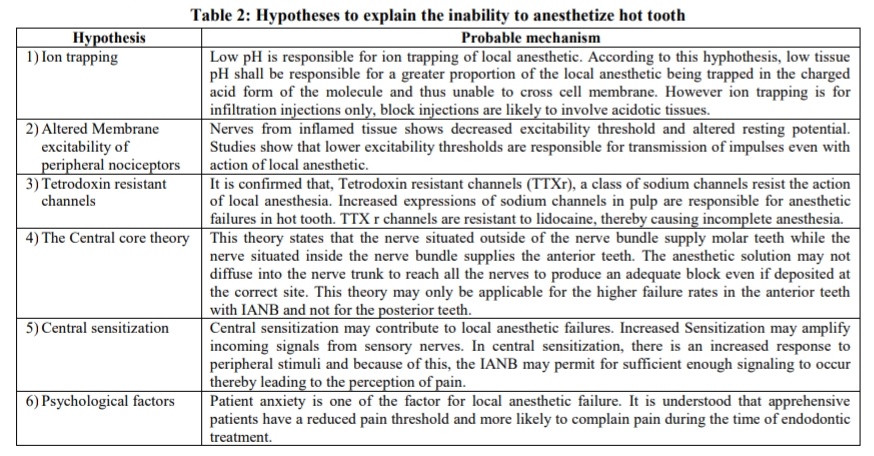
Mechanism
There is a special class of sodium channels on C – fibers, known as tetrodotoxin-resistant (TTXr) sodium channels. The expression shifts from TTX- sensitive to TTXr during neuroinflammatory reactions and the TTXr sodium channels play a role in sensitizing C-fibers and creating inflammatory hyperalgesia. One of the clinically significant characteristics of these sodium channels is that they are relatively resistant to lidocaine. These channels are five times more resistant to anesthetic than TTX- sensitive channels. Hot tooth may be explained by the fact that the TTXr sodium channels have not been adequately blocked by the anesthetic.
Management
Bupivacaine has been found to be more potent than lidocaine in blocking TTXr channels and may be the anesthetic of choice when treating ‘hot tooth.’ Supplemental intraligamentary or intraosseous injections are most helpful to ensure profound local anaesthesia.
References:
- Grossman’s Endodontic Practice (13th edition)
- Article – International journal of Biomedical research ( Hot tooth – A challenge to endodontists)

 Dentowesome
Ur posts are very helpful dr this topic is taken by my friend it will be helpful for him i will surely tell him to go through this thanks dr🙏🙏😊
LikeLike