Hepatitis B is a virus that occurs in the liver. It can be acute or chronic.
Stacey is a 36-year-old woman. She has not been feeling well lately. Her symptoms are general, and she thinks she is just run down or getting the flu. She is tired, has no appetite, has abdominal pain, and has a headache. However, today Stacey noticed that her urine is a little dark. She decides to go see her doctor.
Hepatitis B is a virus of the liver. It can be acute, meaning that a person will have hepatitis B for a short period of time and then get better. Hepatitis B can also be chronic, meaning that it can cause a long-term infection and will eventually cause damage to the liver. Sometimes there are no symptoms associated with hepatitis B, but it is still contagious to others as long as it is present in the body.
Symptoms of Hepatitis B
- Liver damage is by sensitised T lymphocytes (most common)
- Virus has direct cytopathic effect, damaging the liver directly by virus
- HBV causes immune complex disease due to HBsAg + Anti HBs participation
- This complex immune disease manifests as serum sickness like illness ( Rash, Arthralgia, High grade fever) It is Type III Hypersensitive Reaction
Associated with unrelated diseases because these disease MOT is different
- leprosy
- down syndrome
- hodgkin lymphoma- Paul Ebstein like fever, after taking alcohol, pain occurs in lymph node.
Interpreting Hepatitis B Serology in 5 Easy steps
A unique feature contributing to its virulence, is its ability to trick the host’s immune system by producing decoy antibodies. These decoy antibodies confuse the immune system and make the virus more difficult to fight.
Upon exposure to a virus, the body will produce antibodies against it. These antibodies are detectable in the blood. Hepatitis B surface antibodies, HBsAB provide immunity because the body can now recognize the virus and fight it. Presence of HBsAB can be the result of passive or active immunity immunity. Passive immunity occurs as a result of receiving the hepatitis B vaccine. Active immunity occurs after a previous hepatitis B infection.
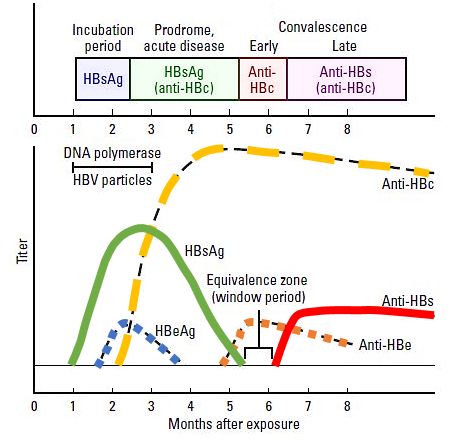
Hepatitis B surface antigen (HBsAg)
- Appears during incubation period (1-6 months), 2-7 weeks prior to symptoms.
- Peaks when the patient is most ill.
- Becomes undetectable in 3-6 months.
- Indicates infection – recent or chronic.
Hepatitis B surface antibody (anti-HBs or HBsAb)
- Arises once the acute disease has resolved.
- Sometimes, not detectable unless until weeks or months after HBsAg has disappeared. This gap is called “window” period.
- Indicates, immunity (by vaccination or infection).
Hepatitis B core antibody (anti-HBc or HBcAb)
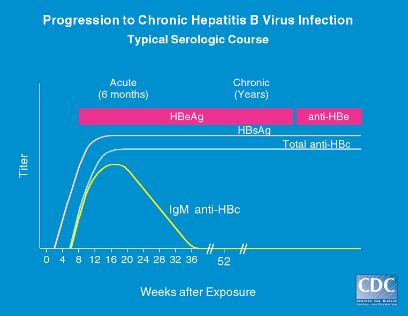
- Anti-HBc IgM and elevated serum transaminases also appear shortly before the symptom onset.
- Over the next few months, anti-HBc IgM is replaced with an IgG component.
- IgM = Recent (Acute) infection
- IgG = Chronic infection
Hepatitis B e-antigen (HBeAg)
- Shortly after HBsAg appears, HBeAg and HBV DNA can be detected in the serum and are markers of the acute viral replication.
- Predictor of infectivity
Hepatitis B e-antibody (anti-HBe or HBeAb)
- Anti-HBe appears shortly after HBeAg vanishes and indicates subsiding viral activity.
- Predictor of low infectivity.
Causes of Hepatitis B
Hepatitis B is transmitted by body fluids including blood, saliva, semen, and vaginal secretions. It moves through mucous membranes and breaks in the skin. It can also be transmitted from mother to baby during birth. Specific actions and populations that increase the risk of contracting hepatitis B are:
- Unprotected sex with someone infected with hepatitis B
- Getting a tattoo or piercing with an unsterilized needle
- Sharing drug needles with an infected person
- Sharing razors or toothbrushes with someone infected with hepatitis B
- People who are frequently exposed to blood, blood products, or other body fluids
- Health care workers
- Travelers who go to areas with uncertain sanitary conditions
- People with a history of sexually transmitted diseases
- Those who have received blood or blood products
Stacey has had several sexual partners and does not always practice safe sex. She has had four sexual partners in the last six months. Stacey makes sure to let her doctor know this information. The blood work has resulted, and Stacey is positive for hepatitis B. It seems that Stacey contracted it through having unprotected sex with a partner with hepatitis B.
Treatment for hepatitis B depends on how long a person has had the virus, if there are symptoms, and if it is a chronic infection. Acute hepatitis B with minimal or no symptoms is treated at home with eating a balanced diet, drinking fluids, resting, and avoiding drugs and alcohol. If a person is experiencing severe symptoms, an antiviral medication may be prescribed, but it is uncommon. Hepatitis B is considered acute if it lasts less than six months.

 Dentowesome